Saturday, May 26, 2012

Generic Portraits

The Aviatrix,  24 x 20, Acrylic, 2008
Girl Reporter, 24 x 18. Acrylic, 2008
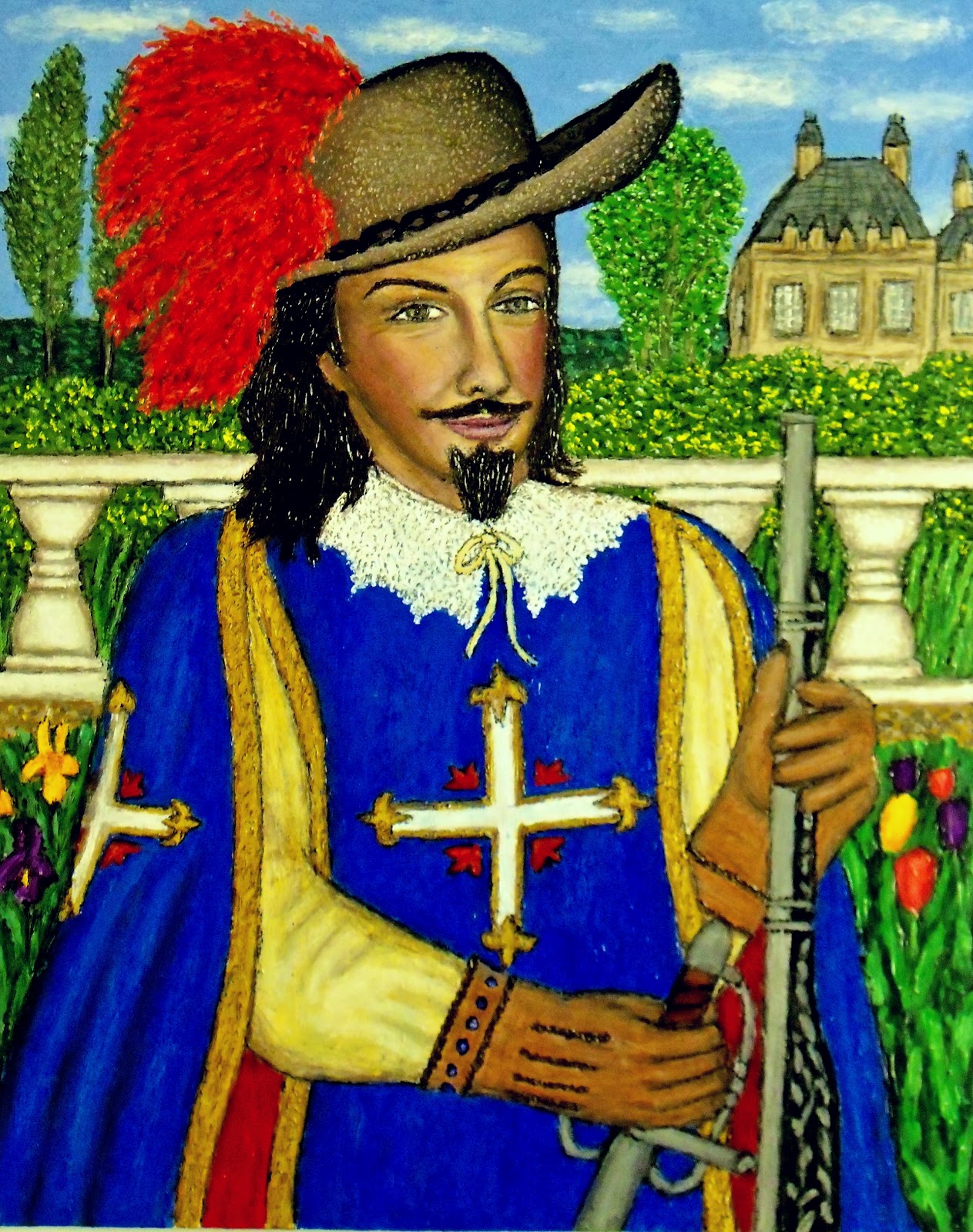
Kings Musketeer, 20 x 16, Acrylic,  2010
Miss Rockford of 2020, 36 x 24, Acrylic, 2005

The generic portrait is halfway between the individual portrait and the picture of the unidentified person; it is a depiction of someone who represents or personifies a class, a type, a specific variety of humanity.  It can be of a person exemplifying a certain period, place or ethnicity.  It can epitomize a person pursuing a particularly activity or profession.  I have, over the years, painted several types of generic portraits, but except for fashion plates and period costume illustrations, I have never compiled a series or built up a collection.  (The idea of doing so has some merit.)  With the generic portrait the artist is spared the necessity of capturing an individual likeness, which can doom the artwork to failure if it is incompletely or unconvincingly accomplished.  But, without a model to reference and with a total reliance upon the imagination, there can be other problems.  For instance, the face has to look good and at the same time represent what it's supposed to -- not always so simple to achieve.  One can, of course, choose a model without the obligation to follow it religiously, and I have done this several times.  There have been times as well when I have set out to paint a celebrity portrait and having fallen short of a modicum of verisimilitude,  turned it into a generic portrait -- who's to know? 


To see more of my work go to my website www.stephenwardeanderson.com

If you like my work you are invited to friend me on Facebook

Tuesday, April 24, 2012

Allegories in Sepia


The Seven Temptations, 19 x 41, Tempera on shade cloth on Particle Board, 1989.

Apollo and the Muses, 33 x 45, Tempera on Shade Cloth on Hardboard, 1989.

I had begun experimenting with monochromatic paintings in the mid 1980's.  I originally strove to replicate sepia-tone effect of old-fashioned photos, but soon found burnt sienna to be a better color. Not too dark or light, it can be effectively tinted and shaded and in its lighter tints closely matches flesh color.  After having done a fairly large number "sepia" paintings, I endeavored to create some allegorical taleaux/group portraits.  In 1989 I executed the two ambitious works shown here, one drawn from Christian iconography, the Seven Temptations, and the other from classical mythology, Apollo with the nine Muses.  I believe both these works were exhibited at my first show at Phyllis Kind Gallery in Chicago in 1990.  They were eventually purchased by the noted artist Roger Brown and after his death became part of the Roger Brown Study Collection of the Art Institute.

To see more of my work check out my website at www.stephenwardeanderson.com


If you like my work please friend me on Facebook at www.facebook.com/stephenwarde.anderson


    Thursday, March 15, 2012

    Nefertiti


    Nefertiti 31 x 23 inches, 1986

    One of the few paintings I have saved for myself, this early portrait of Nefertiti has been hanging behind my bedroom/studio door for more than twenty years.  I painted it almost two years before I had my first art show in 1988, and it was the results from this effort that spurred to work full time as an artist with the idea of being a  selling professional.  After finishing it, I deluded myself into thinking I kinda, sorta had something here.  Perhaps I was wrong: this piece was eventually offered for sale, but there were no takers.  Only years later, after I decided not to sell it, was there any interest in it.
    The painting was executed with my early technique.  I mixed tempera paints in coke bottle caps and when they dried I reliquified the paint to a thick consistency with saliva and applied it with flexible plastic styluses made from whipped cream containers and from sewing needles.  The flesh was done with a pointelist technique, little dots of various shades and tints painstakingly applied with a needle.  The painting surface, in this case, consisted of strips of curtain stiffening glued to illustration board and then foamboard.  It provided the perfect texture for the technique.  I employed this technique for several years, but I'm not sure I achieved  as much success with any of my subsequent efforts.  I went on to produce many paintings of Egyptian queens and princesses over a period of years.  This particular piece, although it's not a patch on the famous painted bust in the Berlin Museum, nevertheless continues to hold a certain mystique for me.  

    For more of my work see my website www.stephenwardeanderson.com  

    If you like my work you may friend me on Facebook   

    Monday, February 27, 2012

    Vocaloid Portraits

    Miku Hatsune, 16 x 22 inches, acrylic on museum board on foam board, 2010

    Prima, 16 x 12 inches, acrylic on museum board on foam board, 2010


    A decade ago Yamaha developed a synthesized voice that could be used for musical recording.  The individualized computer programs were called vocaloids®.  The first ones were primitive and mechanical sounding, but later vocaloids sounded pretty good, especially singing in Japanese.  (The language seems more suitable than English for this and, frankly, most J-pop singers sound like vocaloids anyway.)  To successfully market them, images and identities were developed for each vocaloid.   The superstar of Japanese vocaloids remains Miku Hatsune (or is Hatsune Miku more correct?).  From her initial recording of a Finnish polka and a smashing version of 70's folk song Misaki Meguri (one of my all-time favorite songs), she has gone on to become a virtual diva, even recently giving a concert in Chicago.  You Tube features many Miku videos with some very delightful songs.  She is portrayed variously in the chiba form, a squat, simple drawing, as an air-brushed anime image, and in a 3-D version.  She wears a variation of a school-girl's costumes and has very long turquoise hair.  In painting her, I drew upon the conventional images, but imagined that she is a real person.  As a companion, I also did a picture of the operatic diva Prima.  Althouhg it isn't something I currently have time for, I would love to purchase the software for Miku and see if I can program her to sing some of the songs I have written over the years.  

    You may see more of my work at www.stephenwardeanderson.com

    If you like my work please friend me on Facebook

    Saturday, February 11, 2012

    Idols

    Lorencia 12 x 9  2010
    Zorella 12 x 9  2010
    Kardonia 12 x 9  2010
    Livania 10 x 8  2010
    Josepha 10 x 8  2010
    Parmela 10 x 8  2010

    The portrait genre extends from the realistic depiction of an actual person to that of a fictional person to that of a generic portrait representing a particular kind of person or an individual representing specific qualities to any variety of stylized human likenesses.  My idea with this series of pictures was to create paintings resembling statue busts -- idols.  I wanted them to possess an archetypal quality, a static dignity, not an image of a woman, but an image of an image of a goddess-like woman.  By presenting them in symmetric full-face, keeping the eyes closed (it worked better for me than the empty eye approach of classical sculptors), and coloring the skin in cool colors that are never be natural I achieved the effect that I wanted.  These are all small paintings, 10 x 8 to 12 x 9.  I executed a couple larger pictures along the same line, but somehow they seemed less successful.

    You may see more of my work on my website at  www.stephenwardeanderson.com
    If you like my work you may friend me on Facebook


    Monday, January 30, 2012

    Emancipation Tableau

    Emancipation Tableau, Acrylic, 24 x 30, 2012


    I recently completed this tableau illustrating the Jan. 1, 1863 signing of the Emancipation Proclamation with a collective portrait of those most involved and responsible for the abolition of slavery in this country.  It is not intended as a literal depiction; the figures painted are not all shown as they would have been in 1863 (John Brown, for instance, had been hanged years before) and the relative heights are not necessarily accurate. 


    In the center, seated, ready to sign is Abraham Lincoln.  To his left is his Vice-President Hannibal Hamlin, an abolitionist from Maine who also served in the House, the Senate, as a governor, and ambassador, and to his right is Representative Thaddeus Stevens, chairman of the Way and Means Committee, so powerful he was called the Dictator of the House.  Stevens is often seen, unjustly, in an unfavorable light owing to his vindictive quest to impeach President Andrew Johnson, but history upholds his views and his vision.  He was not only an ardent supporter of equality and education for freed slaves, he strongly believed that diversity, ethnic and cultural, serves to enrich society -- not a common opinion at the time.  Standing, from left to right, is John Brown, a figure of tremendous power and intense conviction, even though he was just a simple farmer.  Despite his radical militarism, of which few approved, he was revered as a martyr.  Next to him was his initial supporter in Kansas, Amos Adams Lawrence, a philanthropist who contributed to the colonization of Liberia and sent rifles to help the northern settlers in Kansas who were being threatened there by Southerners who were mostly paid thugs.  Lawrence, Kansas, was named for him; he later put up money for the college there and for Lawrence College in Appleton, WI, a city named after his father-in-law.  His father Amos and uncle Abbott, who founded Lawrence, MA,  were Boston Brahmins, among the wealthiest men in the country, and the family established the tradition and the standard of American philanthropy.  William Lloyd Garrison was publisher of The Liberator and the most influential and well-known abolitionist.  Robert Purvis was a collaborator and philanthropist.  He was originally from Charleston, his father being English, his maternal grandparents, Jewish and black Moorish.  He was educated as a gentleman, attended Amherst College, and inherited considerable wealth that he choose to use to benefit the cause of emancipation and equal rights.  Frederick Douglass, run-away slave with a black mother and a white father, an accomplished  orator and writer, was one of the great Americans of the 19th Century and was the symbol of emancipation and of the Negro race.    General Ulysses S. Grant, not only a great military leader but a quiet, modest man of great humanity, was most responsible for winning the Civil War.  Colonel Robert Gould Shaw, a dashing figure from a wealthy family, commanded a colored regiment from Massachusetts that proved the worth of the African-American soldier.  He would die heroically with his men and be remembered as a hero.  Harriet Tubman, like Douglass, a former slave from Maryland, was active in the Underground Railroad and had an extraordinary and valiant career working for abolition and other causes.   John Greenleaf Whittier, a Quaker, campaigned tirelessly against slavery and used his poetry to aid the cause.  Harriet Beecher Stowe, sister of celebrated preacher Henry Ward Beecher, was a novelist whose first book, Uncle Tom's Cabin, written in 1851 when she was 39, had a profound impact on people's attitude toward slavery.

    What the painting commemorates has personal significance for me because in my mother's family were many abolitionists and I am, in fact, related to several of the figures depicted.   My mother's great-grandfather, Elijah Whittier Blaisdell was a publisher in Vermont who printed abolitionist tracts and pamphlets.  His son, Elijah Whittier Blaisdell, Jr. came to Rockford, IL in 1853, was a founder of the Republican Party, and published a newspaper, the Rockford Republican, which supported the cause of abolition.  He met Abraham Lincoln at a meeting of newspaper publishers and was so impressed with him that he became the first to support Lincoln for President -- in 1856.  My great-grandfather served in the Illinois State legislature in 1859 and had the opportunity to vote for Lincoln for Senator.   Lincoln was, in fact, a distant relation: Blaisdell's fourth great-grandmother, Mary Gilman was the sister of Blanche Gilman who married Edward Lincoln, Abe's immigrant ancestor.  His wife, my great-grandmother, Elizabeth Woodbridge Lawrence, had a brother, Charles B. Lawrence who became an abolitionist after going south for his health and working as a schoolmaster in Mississippi.  As a lawyer in Illinois (later Chief Justice of the Illinois Supreme Court)  he was a personal as well as professional friend of Lincoln. --- John Brown is a descendant of Rev. John Woodbridge ( a grandson of Governor Thomas Dudley of the Massachusett's Bay Colony) and his wife Abigail Leete ( a daughter of Connecticut governor William Leete), as I am, and is a fifth cousin.  My great-grandmother Elizabeth Lawrence was not a close relation of Amos Adams Lawrence, but they both were descended from John Lawrence, a carpenter/builder who emigrated to Watertown, MA from Suffolk, England in the early 1630's.  However, from other connections A.A. Lawrence is my mother's fourth cousin.  I am also related to Garrison, and Grant is a sixth cousin.  Hannibal Hamlin, whose fourth great-grandfather was Miles Standish, had Plymouth Colony ancestry, which I don't, but through the Sherman family we have a common ancestor in 16th century England.   Colonel Shaw, also descended from Governor Thomas Dudley as well as from the eminent non-conformist minister Rev. John Lothrop, is a fifth cousin of mine as is Harriet Beecher Stowe. I am not related to John Greenleaf Whittier, but the Whittiers and the Blaisdells, my mother's family, were well-acquainted with each other, both living in Amesbury and Haverhill, MA.  My great, great, great grandfather's step-father was, in fact, Nathaniel Whittier, a second cousin of John Greenleaf Whittier's father.

    If you wish to see more of my work go to my website as www.stephenwardeanderson.com

    If you like my artwork you may friend me on Facebook


    Thursday, January 26, 2012

    Civil War Generals

    Portrait of General George Armstrong Custer, 24 x 18, 2009

    Portrait of General Ulysses S. Grant, 20 x 16, 2010

    My interest in history has drawn me to do a considerable number of historical portraits, although mostly I've concentrated on women.  I've only scratched the surface with masculine portraits, but here are two I completed in last few years.  I painted Custer as he was post-Civil War, but well before the Little Big Horn by which time he had cut his famous long blondish hair.  I wanted a bit of a raw-boned look that characterized frontiersmen and soldiers who had to endure hardships, inclement weather, and bad food.  This image was featured as a full-page illustration in the February, 2011 issue of Civil War Times magazine.  The general Grant portrait is a little more traditional, less folk arty.  I have a fondness for the man: he is the quintessential Midwestern American.  I live on Grant Avenue, my grandfather's uncle, a sergeant in the famous Galena regiment, soldiered with him, my politician great-grandfather campaigned for him when he ran for President, and he's a distant relative. 

    You can see more of my work on my website www.stephenwardeanderson.com

    If you like my work you can friend me on Facebook