Thursday, June 28, 2012

Valerie the Velonaut

Valerie the Velonaut -- 16 x 20 inches, Acrylic on Museum Board on Panel, 2012

In this painting I depict the adventurous Valerie who is pedaling across the country in her velomobile.  A velomobile is an enclosed recumbent tricycle.  These are popular in the Netherlands, where most of them are made.  Most velomobiles in this country are imported, although some European models are starting to be manufactured here.  This model is the Strada made by Blue Velo in Canada.  Valerie's velo sports a custom paint job and covers over the spoke tires (two in front, one in back like a tadpole trike).  Velomobiles are about a yard wide and from seven to nine feet long, weighing as much as 75 pounds.  Despite the weight, they are faster and much more efficient than even racing bikes, due to an aerodynamic shape that cuts down on drag.  If I had the money and the time to go places, I'd have one of these!

To see more of my artwork go to my website at www.stephenwardeanderson.com

If you like my work, you may friend me on Facebook

Wednesday, June 13, 2012

Safari Girl

Sabina, Safari Girl - Acrylic on Museum Board on Panel, 16 x 20 inches, 2012

Continuing with the idea of the generic portrait, I recently completed the above picture of a character from my imagination, Sabina, the Safari Girl.  This is set somewhere on the savannah of East Africa.  The wildlife pictured are a vervet monkey, a cheetah, some impalas, a zebra, a long-crested eagle, a turquoise-spotted swordtail butterfly, and a rock python (big and scary, but they don't eat many people.)  She has with her a new Sony Cybershot HX200V.   Photography being her main purpose of her safari and not hunting, is evidenced by the fact that the gun she carries is without the telescopic site that would be attached for serious shooting.  The rifle, given to her by her late grandfather who acquired it in the 1950's in South America, is a classic 7mm Spanish Mauser, derived from bolt-action Gewehr 98 developed by German weapon designer and industrialist Paul Mauser in the 1890's.  (It's still supposed to be a great gun.)  Sabina needs it for those nasty snakes and things one encounters on safari.

To see more of my work go to my website at www.stephenwardeanderson.com
You may also friend me on Facebook

Saturday, May 26, 2012

Generic Portraits

The Aviatrix,  24 x 20, Acrylic, 2008
Girl Reporter, 24 x 18. Acrylic, 2008
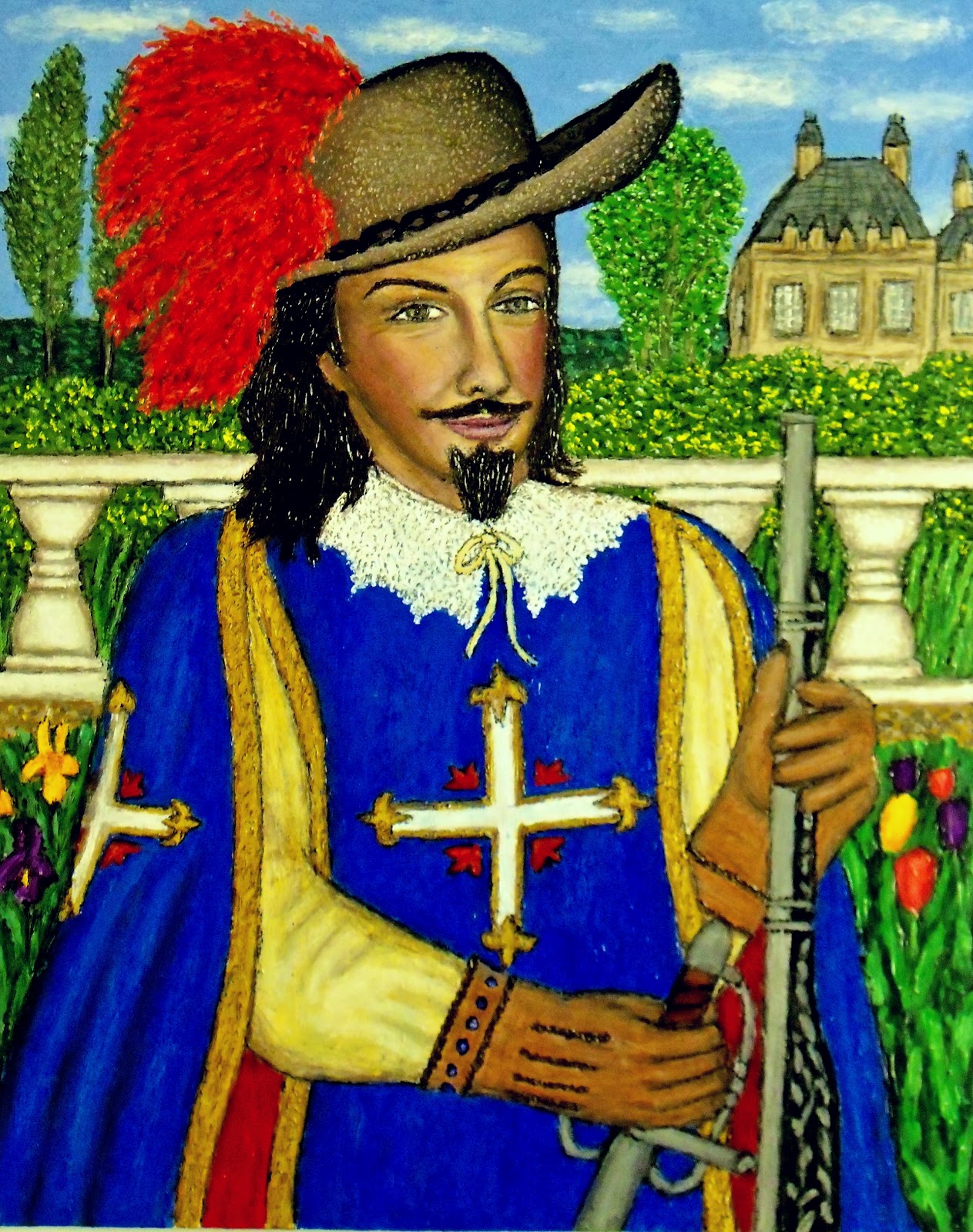
Kings Musketeer, 20 x 16, Acrylic,  2010
Miss Rockford of 2020, 36 x 24, Acrylic, 2005

The generic portrait is halfway between the individual portrait and the picture of the unidentified person; it is a depiction of someone who represents or personifies a class, a type, a specific variety of humanity.  It can be of a person exemplifying a certain period, place or ethnicity.  It can epitomize a person pursuing a particularly activity or profession.  I have, over the years, painted several types of generic portraits, but except for fashion plates and period costume illustrations, I have never compiled a series or built up a collection.  (The idea of doing so has some merit.)  With the generic portrait the artist is spared the necessity of capturing an individual likeness, which can doom the artwork to failure if it is incompletely or unconvincingly accomplished.  But, without a model to reference and with a total reliance upon the imagination, there can be other problems.  For instance, the face has to look good and at the same time represent what it's supposed to -- not always so simple to achieve.  One can, of course, choose a model without the obligation to follow it religiously, and I have done this several times.  There have been times as well when I have set out to paint a celebrity portrait and having fallen short of a modicum of verisimilitude,  turned it into a generic portrait -- who's to know? 


To see more of my work go to my website www.stephenwardeanderson.com

If you like my work you are invited to friend me on Facebook

Tuesday, April 24, 2012

Allegories in Sepia


The Seven Temptations, 19 x 41, Tempera on shade cloth on Particle Board, 1989.

Apollo and the Muses, 33 x 45, Tempera on Shade Cloth on Hardboard, 1989.

I had begun experimenting with monochromatic paintings in the mid 1980's.  I originally strove to replicate sepia-tone effect of old-fashioned photos, but soon found burnt sienna to be a better color. Not too dark or light, it can be effectively tinted and shaded and in its lighter tints closely matches flesh color.  After having done a fairly large number "sepia" paintings, I endeavored to create some allegorical taleaux/group portraits.  In 1989 I executed the two ambitious works shown here, one drawn from Christian iconography, the Seven Temptations, and the other from classical mythology, Apollo with the nine Muses.  I believe both these works were exhibited at my first show at Phyllis Kind Gallery in Chicago in 1990.  They were eventually purchased by the noted artist Roger Brown and after his death became part of the Roger Brown Study Collection of the Art Institute.

To see more of my work check out my website at www.stephenwardeanderson.com


If you like my work please friend me on Facebook at www.facebook.com/stephenwarde.anderson


    Thursday, March 15, 2012

    Nefertiti


    Nefertiti 31 x 23 inches, 1986

    One of the few paintings I have saved for myself, this early portrait of Nefertiti has been hanging behind my bedroom/studio door for more than twenty years.  I painted it almost two years before I had my first art show in 1988, and it was the results from this effort that spurred to work full time as an artist with the idea of being a  selling professional.  After finishing it, I deluded myself into thinking I kinda, sorta had something here.  Perhaps I was wrong: this piece was eventually offered for sale, but there were no takers.  Only years later, after I decided not to sell it, was there any interest in it.
    The painting was executed with my early technique.  I mixed tempera paints in coke bottle caps and when they dried I reliquified the paint to a thick consistency with saliva and applied it with flexible plastic styluses made from whipped cream containers and from sewing needles.  The flesh was done with a pointelist technique, little dots of various shades and tints painstakingly applied with a needle.  The painting surface, in this case, consisted of strips of curtain stiffening glued to illustration board and then foamboard.  It provided the perfect texture for the technique.  I employed this technique for several years, but I'm not sure I achieved  as much success with any of my subsequent efforts.  I went on to produce many paintings of Egyptian queens and princesses over a period of years.  This particular piece, although it's not a patch on the famous painted bust in the Berlin Museum, nevertheless continues to hold a certain mystique for me.  

    For more of my work see my website www.stephenwardeanderson.com  

    If you like my work you may friend me on Facebook   

    Monday, February 27, 2012

    Vocaloid Portraits

    Miku Hatsune, 16 x 22 inches, acrylic on museum board on foam board, 2010

    Prima, 16 x 12 inches, acrylic on museum board on foam board, 2010


    A decade ago Yamaha developed a synthesized voice that could be used for musical recording.  The individualized computer programs were called vocaloids®.  The first ones were primitive and mechanical sounding, but later vocaloids sounded pretty good, especially singing in Japanese.  (The language seems more suitable than English for this and, frankly, most J-pop singers sound like vocaloids anyway.)  To successfully market them, images and identities were developed for each vocaloid.   The superstar of Japanese vocaloids remains Miku Hatsune (or is Hatsune Miku more correct?).  From her initial recording of a Finnish polka and a smashing version of 70's folk song Misaki Meguri (one of my all-time favorite songs), she has gone on to become a virtual diva, even recently giving a concert in Chicago.  You Tube features many Miku videos with some very delightful songs.  She is portrayed variously in the chiba form, a squat, simple drawing, as an air-brushed anime image, and in a 3-D version.  She wears a variation of a school-girl's costumes and has very long turquoise hair.  In painting her, I drew upon the conventional images, but imagined that she is a real person.  As a companion, I also did a picture of the operatic diva Prima.  Althouhg it isn't something I currently have time for, I would love to purchase the software for Miku and see if I can program her to sing some of the songs I have written over the years.  

    You may see more of my work at www.stephenwardeanderson.com

    If you like my work please friend me on Facebook

    Saturday, February 11, 2012

    Idols

    Lorencia 12 x 9  2010
    Zorella 12 x 9  2010
    Kardonia 12 x 9  2010
    Livania 10 x 8  2010
    Josepha 10 x 8  2010
    Parmela 10 x 8  2010

    The portrait genre extends from the realistic depiction of an actual person to that of a fictional person to that of a generic portrait representing a particular kind of person or an individual representing specific qualities to any variety of stylized human likenesses.  My idea with this series of pictures was to create paintings resembling statue busts -- idols.  I wanted them to possess an archetypal quality, a static dignity, not an image of a woman, but an image of an image of a goddess-like woman.  By presenting them in symmetric full-face, keeping the eyes closed (it worked better for me than the empty eye approach of classical sculptors), and coloring the skin in cool colors that are never be natural I achieved the effect that I wanted.  These are all small paintings, 10 x 8 to 12 x 9.  I executed a couple larger pictures along the same line, but somehow they seemed less successful.

    You may see more of my work on my website at  www.stephenwardeanderson.com
    If you like my work you may friend me on Facebook